
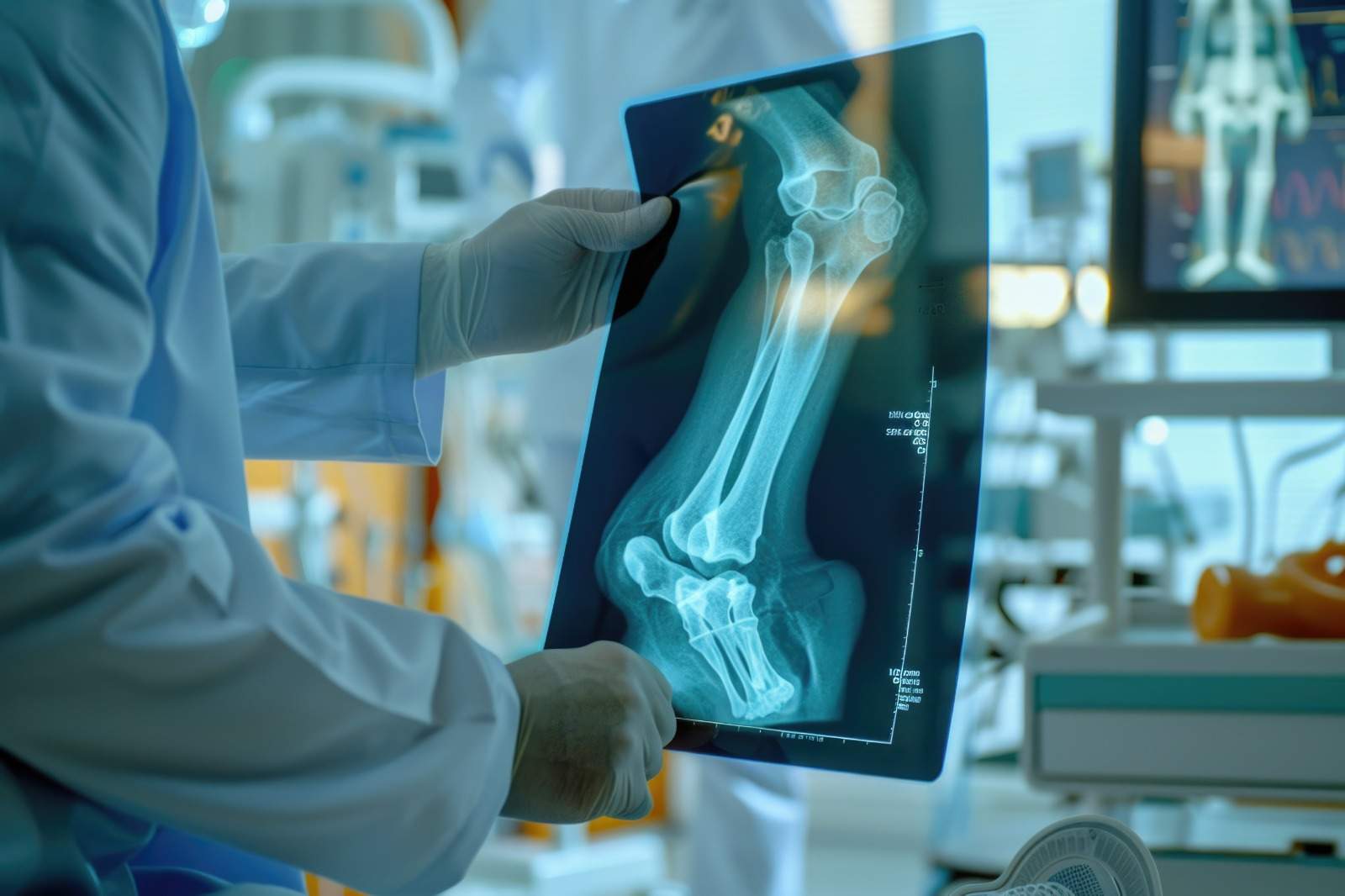
Technology is changing fast, and healthcare follows. Over the previous years, AI in orthopedics has grown from a lab notion to a viable clinical tool. It’s altering the way physicians identify bone abnormalities, plan for surgery, and support patients with healing. Better patient care.
Fewer errors. Faster recovery. This means better tools and smarter decisions for surgeons. Here’s a bird’s-eye perspective of how AI is revolutionizing the area of Orthopedic surgery.
What is AI in Orthopedics?
AI in Orthopedics is not one tool. It is a collection of clever technologies working together. AI is robotics and imaging analysis, machine learning, and deep learning. AI is transforming the face of Orthopedic surgery and is driving it towards precision and customisation with smart use in preoperative planning, intraoperative aid, and postoperative rehabilitation and monitoring.
In basic terms, AI helps surgeons make better judgments before, during and after surgery. Smart orthopedic healthcare with AI is coming into the scene with doctors and surgeons across the globe.
AI in Orthopedic Surgery: How Do Orthopedic Surgeons Use AI Major Applications
Understanding how orthopedic surgeons employ AI helps patients understand the real benefits of this technology. It’s not about substituting doctors. It’s making them better at their jobs. One of the new trends in Orthopedic technology is AI.
1. Intelligent Diagnosis & Imaging
Early diagnosis of anomalies is one of the primary challenges in bone care.Deep learning models have achieved comparable performance to human clinicians in diagnosing fractures on internal validation datasets with a sensitivity of 92% and a specificity of 91%. Some studies show that AI can identify fractures with up to 98% accuracy, which is on par or better than human experts.“Faster treatment and better outcomes result from fewer undetected fractures.”
2. Customized Surgery Planning
Everybody is unique. AI-powered tools allow Orthopedic surgeons to create personalized treatment plans for every single patient based on imaging data, medical history, and functional assessments. This technology can offer the best surgical or conservative treatment techniques according to the individual needs of the patient.
3. Robotics-Assisted Surgery.
Robotic surgery is becoming one of the most exciting breakthroughs in Orthopedic technology. CT scans can be used to improve the preoperative assessment with platforms like the MAKO robotic arm-assisted system. This allows for a 3D picture of the joint, precise placement of the implant, and virtual changes to ensure the knee ligaments are balanced. Studies have shown increased precision of component placement, reduced post-operative pain and length of hospital stay, with improved functional outcomes with the MAKO system.
4. Feedback throughout operation in real time
In knee and hip arthroplasty, robotic systems with AI-based navigation improve the consistency of outcomes by increasing the position accuracy of the implants, adapting to the anatomical variance between patients, providing intelligent safety systems, reducing rates of trauma and infection, and facilitating quicker recovery.
5. Better recovery monitoring
AI doesn’t stop helping after the surgery. Smart devices track the movement, suffering, and recovery of patients remotely. This allows doctors to see difficulties early and customize rehab treatments on the fly.
Benefits of AI in Orthopedic Surgery:
- Both the patient and the surgeon gain from AI in Orthopaedic surgery.
- X-ray & MRI scans with fewer errors in diagnosis
- Better placement of implants in joint replacement surgery
- Shorter hospital stays and faster healing times
- Individual therapeutic approaches according to the patient data
Postoperative Complications: Early Diagnosis
AI prediction systems slashed surgical complications by 30% and accelerated recovery by 20%. AI planning in spine surgery was linked to reduced complication rates from 22% to 4.7%. These are not minor improvements. Their lives improved.
Orthopedic Innovation: The Future Ahead
Orthopedic innovation is moving fast. AI is no longer an add-on but is becoming a basic component of current Orthopedic practice. Artificial intelligence has been employed in many ways in the healthcare sector, especially in orthopaedics, from accurate photo recognition and pre-operative planning to post-operative care and rehabilitation. A number of studies have demonstrated successful integration of AI models in OA diagnosis and in knee and hip arthroplasty.
Smart Orthopedic treatment means patients don’t have to wait weeks for a diagnosis. That means surgeons will enter the operating room with a fully 3D blueprint already in place. So it implies recovery will be data-driven, not guesswork.
Artificial Intelligence Does Not Replace The Surgeon – It Assists Them
This is a known thing. No machine can replace an experienced orthopedic surgeon. AI is a tool, a very powerful tool. “An algorithm cannot replicate the judgment, compassion, and human understanding of a good surgeon in the operating room.”
Traditionally, the outcome of Orthopedic surgery has been largely based on the physical dexterity and cumulative experience of the surgeon. However, with the demand for improved clinical outcomes, higher accuracy and personalized care, the integration of AI and robotic-assisted systems into routine practice is a remarkable change. The best outcomes are always when new technology works hand-in-hand with an experienced doctor, not replaces one.
If you are looking for an Orthopedic specialist who also has clinical experience and knowledge about the latest Orthopedic breakthroughs, start with a consultation. Visit the Orthopedic Doctor in Kolkata site to know how Dr. Saem Ishtiaque delivers Expert and Precise Orthopedic care.