
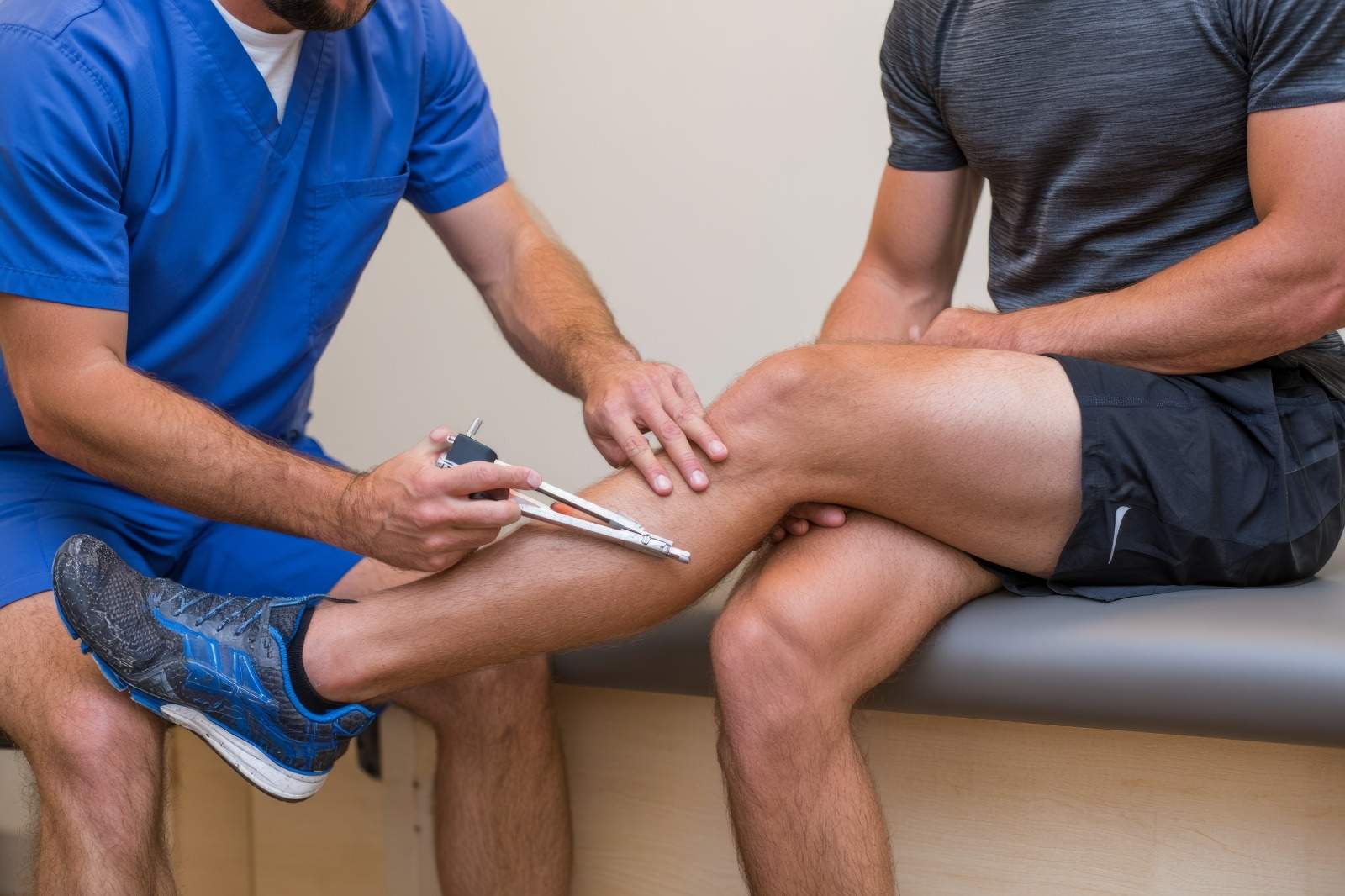
Knee joint replacements are meant to last for years. But sometimes there is loosening, wear, and even infection of the implants over time. If this takes place, then a revision knee replacement surgery will be inevitable.
That is why knowing the conditions under which knee replacement revision is required will help you preserve your mobility without suffering from unnecessary pain.
What Does Revision Knee Replacement Involve?
Revision knee surgery replaces part or all of an existing artificial joint. The surgeon removes the loose or damaged components, treats any bone loss, and fits new implants. Thus, revision TKR is more complex than a first-time replacement and demands specialised planning, advanced implants, and an experienced surgical team. Most patients need it years after the original operation.
Not all revisions are complete. For example, sometimes only the plastic liner is exchanged, while extensive damage requires new metal components and bone grafts. Thus, the plan depends entirely on what imaging and testing reveal about the failed knee replacement before surgery begins. Discussing the options in advance reduces anxiety on the day of admission.
Common Causes of Knee Replacement Failure
Failure of a knee replacement occurs seldom instantly but is usually the result of one of the following problems:
- Loosening: There is a weakening of the connection between the joint prosthesis and bones, leading to pain and instability while walking.
- Infection: Bacteria around the joint prosthesis result in swelling, heat, and constant pain that cannot be cured even with the help of antibiotics.
- Polyethene wear: The thinning of the plastic spacer due to the long period of wear alters joint mechanics.
- Instability: The weakened or injured ligaments cause buckling of the knee.
- Stiffness: Due to scar tissue formation, there is difficulty in joint bending.
- Fracture around the implant: A fall or weakened bone can crack the area supporting the components.
These are clear signs of knee replacement failure.
Symptoms of Failed Knee Replacement You Should Not Ignore
Some warning signs appear gradually, so patients often dismiss them. However, these symptoms of failed knee replacement deserve prompt assessment:
- Pain that returns after a comfortable, pain-free period of good function
- Swelling or warmth that persists for weeks
- A grinding, clicking, or clunking sound during movement
- A sense that the knee is loose or unreliable
- Reduced bending or difficulty straightening the leg fully
- Fever, redness, or wound discharge suggesting infection
- Visible change in leg alignment or a new limp
If you are experiencing these symptoms, then you may need revision knee surgery.
Who Faces a Higher Risk of Revision Surgery?
Certain factors raise the likelihood of a second operation. Knowing them helps you stay alert:
- Patients who received their first implant before the age of fifty-five
- People with high body weight placing extra load on the joint
- Those with weak bone quality or long-term steroid use
- Anyone who has had a previous joint infection
- Very active individuals involved in heavy lifting or running
When Does a Surgeon Recommend Revision Surgery?
Every pain is not necessarily a sign of failure. Take, for instance, mild soreness as a result of inactivity, which is perfectly normal. Diagnosis of failure of the knee replacement involves physical examination, X-ray, blood test, and sometimes joint fluid analysis. Consequently, diagnosis is key rather than assumption, since treatment methods differ.
An experienced revision knee replacement Doctor in Kolkata, like Dr Saem Ishtiaque, can guide the right decision.
Why Timing Makes a Difference
Postponement of revision surgery causes bone loss to continue and reduces the number of implant options available later on. Early referrals preserve healthy bone and make reconstruction simpler. The sooner patients act on their first alert, the faster they recover mobility and require less physiotherapy than others who do not get treatment until their pain becomes excruciating.
Rehabilitation Following Revision TKR
Rehabilitation takes a little bit longer than it would take in the case of primary knee replacement. Most patients start standing with assistance within a couple of days and eventually walk unassisted. Physiotherapy helps to restore strength while frequent examinations ensure the stability of the implant. Therefore, the results are quite promising when the reason for replacement is properly diagnosed.
Listen to What Your Knee Is Trying To Tell You
Your knee is generally known to give signs of distress even before any loss of mobility occurs. It is for this reason that you should view any form of pain, swelling, or instability not as a nuisance but as an opportunity to seek an expert opinion.