
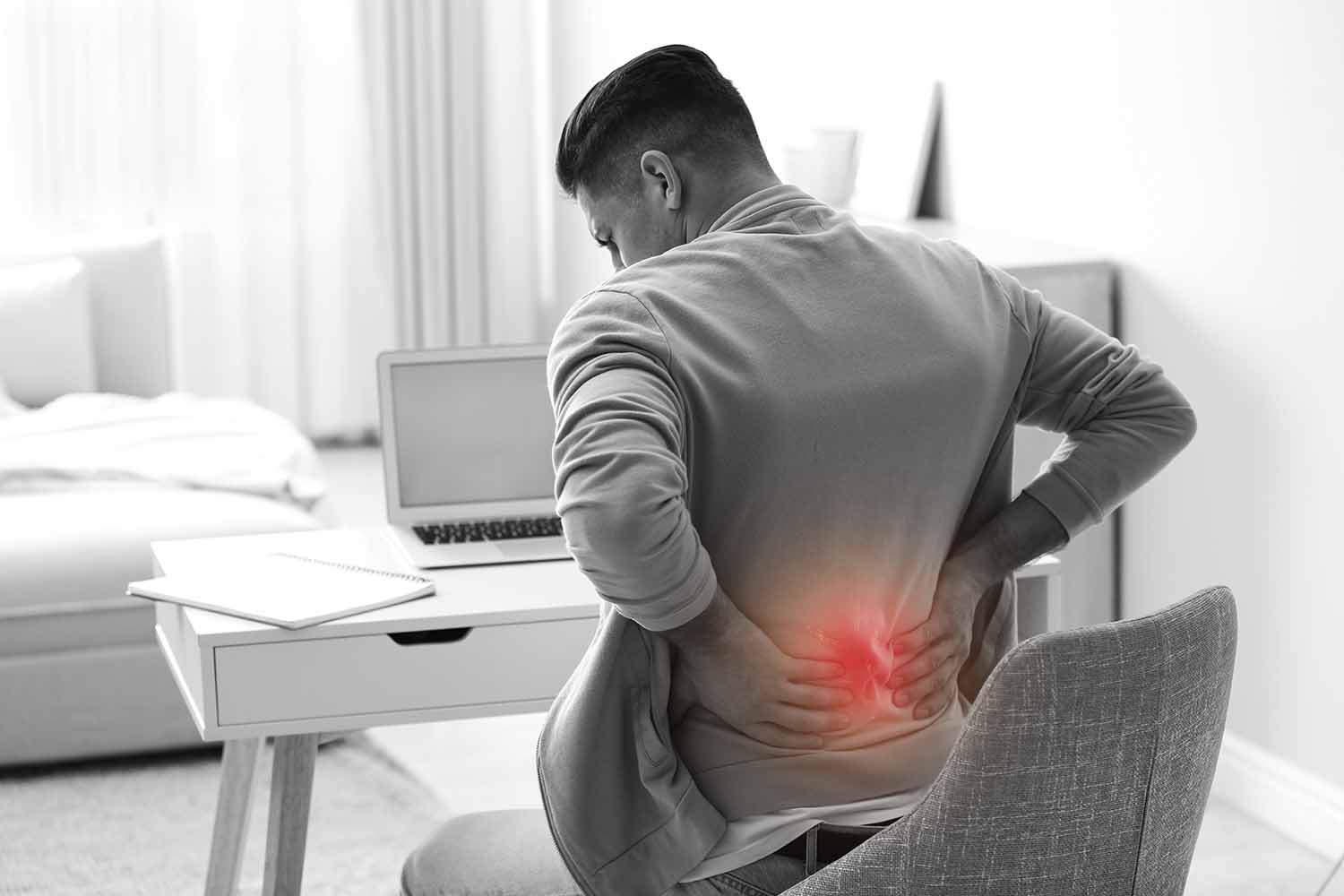
It can be hard to understand why your back hurts.
Sometimes it’s just sore muscles. Sometimes it’s something deeper.
A slide disc, also known as a herniated disc, is one of these conditions that people typically get wrong. A lot of people don’t pay attention to the early indicators because they think it will go away on its own.
But when a disc problem starts to push on nerves, the pain can get very bad and last for a long time.
Let’s make it easy to understand.
What Is a Herniated Disc or Slip Disc?
Your spine is made up of microscopic bones called vertebrae, which are separated by soft discs.
These discs work like cushions by taking in shock and letting things flow smoothly.
The soft part inside a slip disc pushes out through the hard outer layer. We term this a herniated disc.
When this bulge presses on nerves near it, it might cause pain, numbness, or weakness.
That’s when the symptoms start to manifest.
Don't ignore these common symptoms
Depending on whatever section of the spine is hurt, the symptoms can be different.
But some indications that are common are:
- Pain in the lower back that doesn't go away
- Pain that spreads to the leg, like sciatica
- Tingling or numbness in the arms or legs
- Weakness in the muscles
- Hard to stand or walk for a long time
- Pain that gets worse when you sit or bend
Some folks feel a sharp, shooting pain. Some people feel a dull pain.
If that keeps happening, it has to be looked at.
What Makes a Disc Slip?
A slipped disc doesn’t necessarily happen all at once.
It often grows slowly over time.
Some of the most common causes are:
- Wear and tear that comes with age (disc degeneration)
- Bad posture, especially when you sit for a long time
- Not lifting heavy things the right way
- Injury or strain that happens quickly
- Not moving around enough
- Too much body weight
Even minor things you do every day, like sitting with bad posture, can slowly hurt your spine.
How orthopedic doctors figure out what's wrong
Symptoms alone do not determine a diagnosis.
An orthopedic specialist typically employs a systematic methodology:
1. History of health
Knowing when the pain started, how it feels, and what makes it worse.
2. Checkup of the body
Checking the body’s mobility, reflexes, muscle strength, and nerve responsiveness.
3. Tests that use images
It is typical to utilize MRI scans to diagnose a herniated disc and find nerve compression.
This thorough review helps find out what caused the problem and how bad it is.
Ways to Treat a Slip Disc
This is something you should know…
Not every sliding disc needs surgery.
In fact, many instances get better with the right slipped disc treatment without surgery.
Treatment without surgery
- Change of rest and activity
- Drugs for pain alleviation
- Physiotherapy and exercises with guidance
- Fixing your posture
- Therapy using heat or cold
These strategies frequently work to lessen pain and make it easier to move around.
When Surgery Might Be Necessary
In some circumstances, surgery is only an option, such as:
- Severe or getting severe nerve pain
- A lot of weakness in the muscles
- Loss of control over the bladder or bowels (rare but dangerous)
- No progress after extended conservative therapy
Modern surgical methods are less intrusive and aim to relieve strain on nerves.
Why it's important to get treatment early
Not paying attention to symptoms can make nerve compression worse.
Early spine pain treatment helps:
- Avoid problems
- Make recuperation time shorter
- Get better long-term results
If your symptoms don’t go away, orthopedic spine care in Kolkata can help you receive the correct diagnosis and treatment plan.
Easy Ways to Keep Your Spine Safe
Keeping your spine healthy depends a lot on prevention.
A few easy habits can make a big difference:
- Keep your posture decent while you sit and stand
- Don't carry big things the wrong way
- Stay active physically
- Make your core muscles stronger
- Take breaks every now and then while you sit for a long time
Small adjustments can have big effects over time.
Conclusion
A slipped disc might seem bad, and in certain situations, it is.
But with the correct care, most patients get better and go back to their usual lives.
Don’t dismiss the early symptoms; that’s the key.
When it comes to your spine…
Taking action early can help you avoid pain in the long run.